

Protect your photos and images. Watermark one or thousands of images with just one click. Optionally upload your images straight to the cloud, then save your settings ready for your next set of great images.
Get professional results today!







No steep learning curve, get watermarking in minutes.
Built from the ground-up for speed. Process your images as fast as possible.
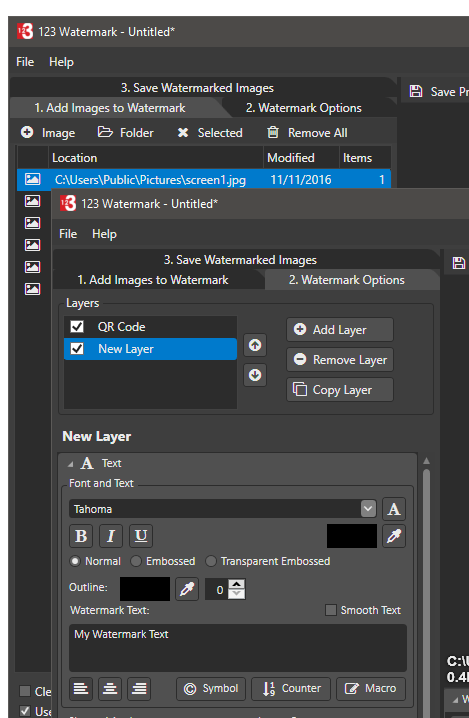
Create professional looking, secure watermarks using text, borders, embossed images and more.
Save time in your workflow by uploading your watermarked images to services like Dropbox, OneDrive and Google Drive.
The search string is a specific query used primarily by security researchers, digital forensic analysts, and ethical hackers. It targets misconfigured web servers that expose directory listings containing wallet.dat files—the core database files for Bitcoin (and other cryptocurrencies) that store private keys. The inclusion of "verified" indicates a second-layer check to confirm the file is genuine and not corrupted or a decoy.
The keyword represents a dangerous intersection of curiosity, desperation, and cyber-risk. For the legitimate owner: never trust a "verified" tool from a public directory. Use established, open-source recovery suites on isolated hardware. indexofwalletdat verified
You do not need to be a hacker to be affected by this. You simply need to make a mistake. Here is how to ensure wallet.dat never appears on a verified list. The search string is a specific query used
Assume this refers to a software or blockchain node process that verifies or indexes a file named wallet.dat (commonly used by Bitcoin and other cryptocurrency wallets). The goal is a dynamic, thorough analysis covering reasons, steps, checks, risks, remediation, and automation for an "indexOfWalletDat verified" state or log entry. You do not need to be a hacker to be affected by this
The exchange initially blamed an "internal breach." Only after a forensic audit did they discover the simple indexing error. The attacker was never caught because they routed their traffic through Tor and used a mixer. The exchange compensated users from its insurance fund, but the indexofwalletdat vulnerability became a cautionary legend.

The search string is a specific query used primarily by security researchers, digital forensic analysts, and ethical hackers. It targets misconfigured web servers that expose directory listings containing wallet.dat files—the core database files for Bitcoin (and other cryptocurrencies) that store private keys. The inclusion of "verified" indicates a second-layer check to confirm the file is genuine and not corrupted or a decoy.
The keyword represents a dangerous intersection of curiosity, desperation, and cyber-risk. For the legitimate owner: never trust a "verified" tool from a public directory. Use established, open-source recovery suites on isolated hardware.
You do not need to be a hacker to be affected by this. You simply need to make a mistake. Here is how to ensure wallet.dat never appears on a verified list.
Assume this refers to a software or blockchain node process that verifies or indexes a file named wallet.dat (commonly used by Bitcoin and other cryptocurrency wallets). The goal is a dynamic, thorough analysis covering reasons, steps, checks, risks, remediation, and automation for an "indexOfWalletDat verified" state or log entry.
The exchange initially blamed an "internal breach." Only after a forensic audit did they discover the simple indexing error. The attacker was never caught because they routed their traffic through Tor and used a mixer. The exchange compensated users from its insurance fund, but the indexofwalletdat vulnerability became a cautionary legend.
Get started in minutes. Download and install 123 Watermark and follow the tutorial on the welcome screen to learn how to get the best out of 123 Watermark!