Dentilink AI — Auto Zalo replies, no-show prediction, treatment plan suggestions · dentilink.cc
Guide to the HP Compaq 8200 Elite BIOS BIN File The HP Compaq 8200 Elite Go to product viewer dialog for this item. remains a popular choice for refurbished workstation builds, but keeping its firmware up to date is essential for stability and modern operating system compatibility. Whether you are performing a routine update or need a raw .bin file for an EEPROM programmer to fix a "bricked" motherboard, this guide covers everything you need to know. Understanding the BIOS .bin File HP Compaq 8200 Elite , the BIOS file is typically distributed as a SoftPaq (.exe) . This executable is a wrapper that contains the actual binary image needed for flashing. Filename Format : The binary image is usually found in the DOS Flash folder after extraction and is named using the format xxx_MMmm.bin . "xxx" represents the BIOS family, while "MMmm" indicates the version number. Version History : Common versions include v02.15 (fixes boot beeps), v02.28 (stable for Legacy mode), and the final v02.33 release. How to Download and Extract the .bin File You can obtain the official BIOS files directly from the HP Software and Driver Downloads page . Download the SoftPaq : Locate the BIOS section for your specific model (e.g., CMT, SFF, or Ultra-slim) and download the latest .exe (such as sp96026.exe for v02.33). Run or Extract : Run the downloaded file on a Windows machine. It will open an information page and extract files to a temporary folder, usually C:\SWSetup\spXXXXX . Locate the .bin : Navigate to the DOS Flash folder within that directory. Inside, you will find the .bin file required for manual flashing or programmer use. Methods for Flashing the BIOS
HP Compaq 8200 Elite BIOS Bin File Feature Introduction The HP Compaq 8200 Elite is a popular business desktop computer that was widely used in the early 2010s. The BIOS (Basic Input/Output System) is a crucial component of the computer's firmware, responsible for initializing hardware components and providing a interface for the operating system to interact with the hardware. The BIOS bin file is a binary file that contains the BIOS firmware for the HP Compaq 8200 Elite. What is a BIOS Bin File? A BIOS bin file is a binary file that contains the BIOS firmware for a specific computer model. It is used to update or flash the BIOS on a computer's motherboard. The bin file contains a sequence of bytes that represent the BIOS firmware, which is executed by the computer's processor during the boot process. HP Compaq 8200 Elite BIOS Bin File Specifications
File format: Binary file (.bin) File size: Typically around 1-2 MB Compatibility: Specific to the HP Compaq 8200 Elite motherboard
Features of the HP Compaq 8200 Elite BIOS Bin File hp compaq 8200 elite bios bin file
Secure Boot : The BIOS bin file supports Secure Boot, a feature that ensures only authorized firmware can run on the computer. UEFI Support : The BIOS bin file supports UEFI (Unified Extensible Firmware Interface), a modern firmware interface that provides a more secure and flexible way to interact with the hardware. Hardware Initialization : The BIOS bin file initializes the computer's hardware components, including the CPU, memory, and storage devices. Boot Options : The BIOS bin file provides various boot options, including booting from USB devices, CD/DVD drives, and network locations.
How to Update the HP Compaq 8200 Elite BIOS Bin File
Using the HP BIOS Update Utility : HP provides a BIOS update utility that can be used to update the BIOS bin file. Using a Third-Party BIOS Update Tool : There are third-party tools available that can be used to update the BIOS bin file, but be cautious when using these tools as they may void the warranty or cause system instability. Guide to the HP Compaq 8200 Elite BIOS
Important Notes
Backup your data : Before updating the BIOS bin file, make sure to backup your important data to prevent any potential loss. Use a stable power source : Ensure a stable power source during the BIOS update process to prevent any damage to the motherboard. Check for updates : Regularly check for BIOS updates to ensure you have the latest security patches and features.
By following these guidelines and using the correct BIOS bin file, you can ensure a successful update of your HP Compaq 8200 Elite's BIOS firmware. Understanding the BIOS
The Ultimate Guide to the HP Compaq 8200 Elite BIOS BIN File: Recovery, Flashing, and Troubleshooting If you are holding onto an HP Compaq 8200 Elite —whether it’s the Small Form Factor (SFF), Tower (CMT), or All-in-One (AIO) version—you possess a piece of PC history. Released in 2011 as part of Intel’s second-generation Core series (Sandy Bridge), these machines are known for their rugged build quality and surprising usability even in 2025 as budget office PCs or home servers. However, age brings problems. One of the most common, yet terrifying issues is a corrupted BIOS . When the BIOS fails, the machine becomes a brick. The solution often lies in a single file: the HP Compaq 8200 Elite BIOS BIN file . This article will explain exactly what this file is, where to find legitimate versions, how to recover a dead motherboard using a hardware programmer, and how to safely flash the BIOS using HP’s own tools. What Exactly is a "BIOS BIN File"? A BIN file (short for Binary) is a raw, sector-by-sector copy of the firmware stored on your motherboard’s SPI flash chip. Think of it as the DNA of your computer’s low-level operations. For the HP Compaq 8200 Elite, the BIOS BIN file contains:
The System BIOS : Initializes RAM, CPU, and storage. The ME Region : Intel Management Engine firmware (critical for booting). The Gigabit LAN firmware : For network boot and MAC address. The VBIOS : Video BIOS for integrated graphics. Boot block and Descriptors : Defines which regions of the flash chip are locked.

comprehensive clinical tool
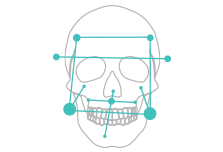
Leveraging Viceph's proprietary A.I model to detect landmarks automatically, simulate treatment results (VTO), superimpose profiles, and more...

end-to-end data encryption
The patient's medical record is securely encrypted to ensure no one, including Viceph, can access it

evidence-based tool
All features in Viceph are backed by scientific evidence

educational tool
Learning cephalometric analysis is made easier with detailed explanations of landmarks, indicators, and analysis results
New product by MedbrainDentilink connects seamlessly with ViCeph — manage your clinic and run cephalometric analysis all within one ecosystem.
Patient Sync
Patients from Dentilink are automatically created and synced into ViCeph.
folder_sharedAuto Records
Full orthodontic records are created automatically when a new patient is registered.
event_availableSchedule from Dentilink
Imaging appointments are created in ViCeph directly from the Dentilink interface.
 New product by Medbrain
Browser-based CBCT review — import GALILEOS, OneVolume or DICOM; linked MPR axial/sagittal/coronal with 3D preview; account scan library and QR sharing.
Local Import
Open GALILEOS, OneVolume or DICOM folders directly in the browser — no software install needed.
MPR & 3D Preview
Linked axial, sagittal, coronal navigation with 3D volume preview and window/level controls.
Save & Share
Save scans to your account, generate public links or QR codes to share with patients or colleagues.