Get full access to Xogot for one year—completely free.
Bring worlds to life with Godot's powerful 3D tools, including a comprehensive scene system, advanced lighting, and flexible scripting
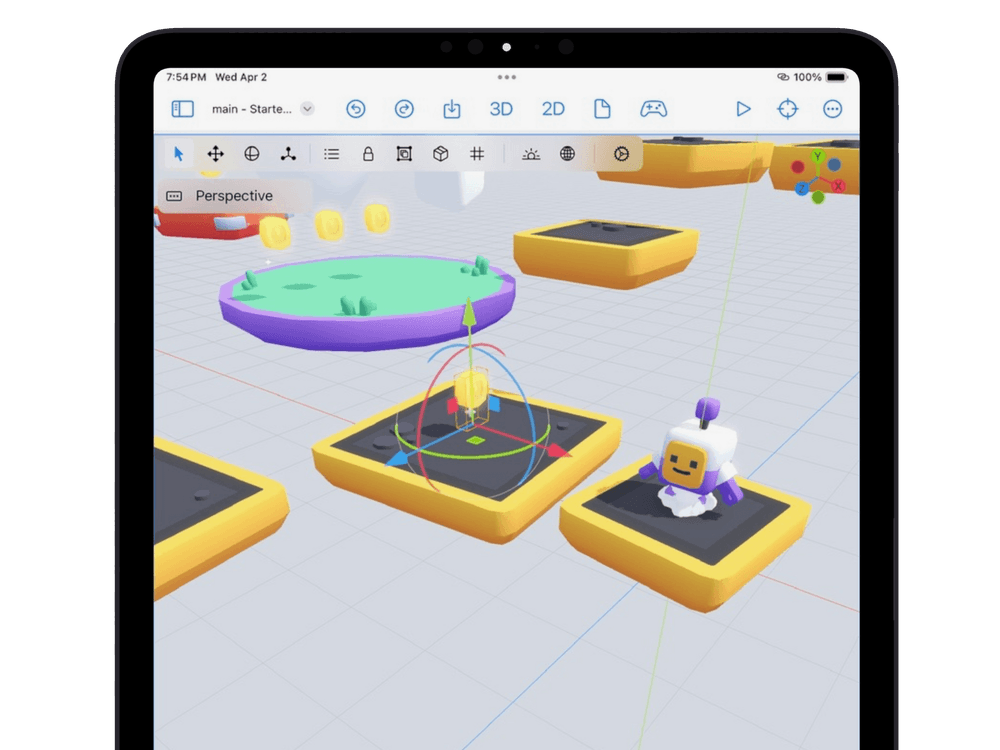
Create games that pop with approachable 2D game development tools including tile map editor, scalable layout, and a dedicated 2D pipeline
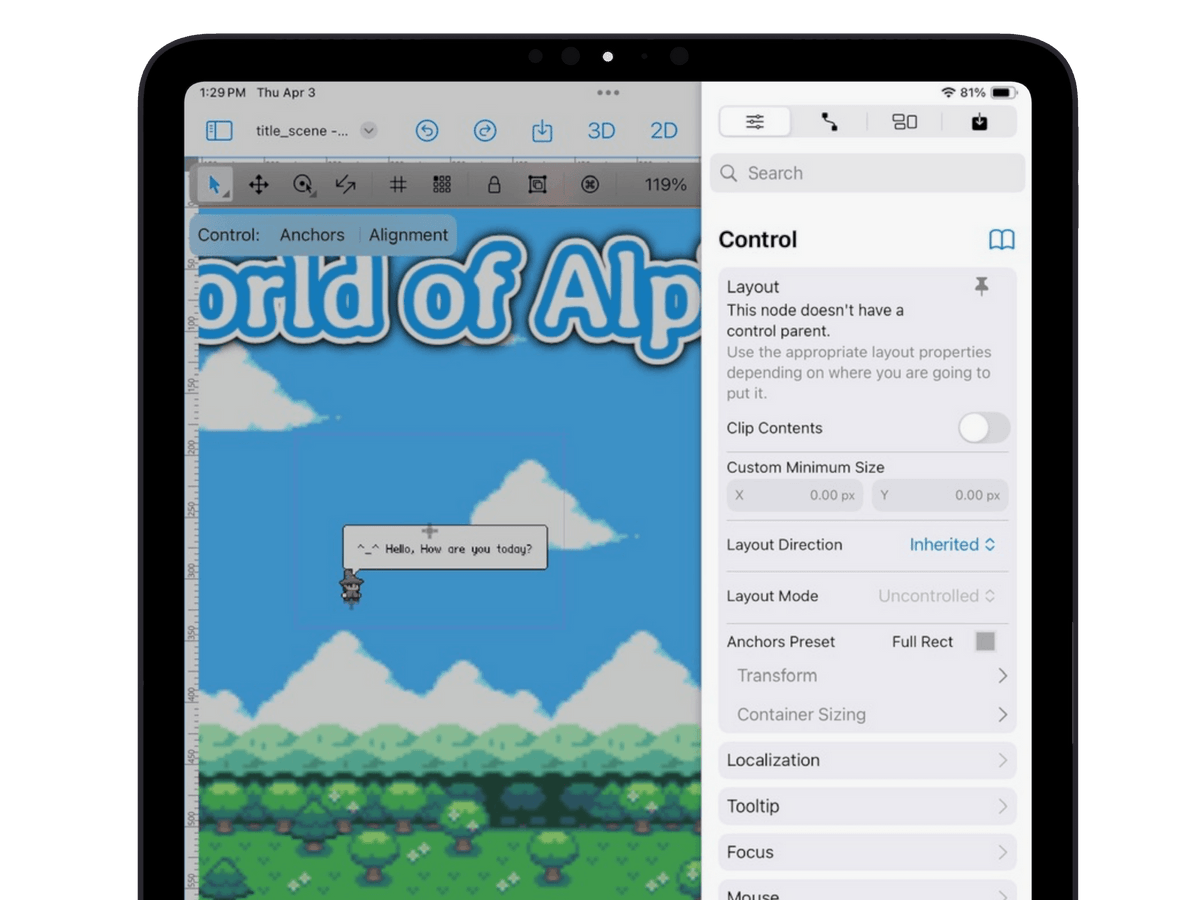
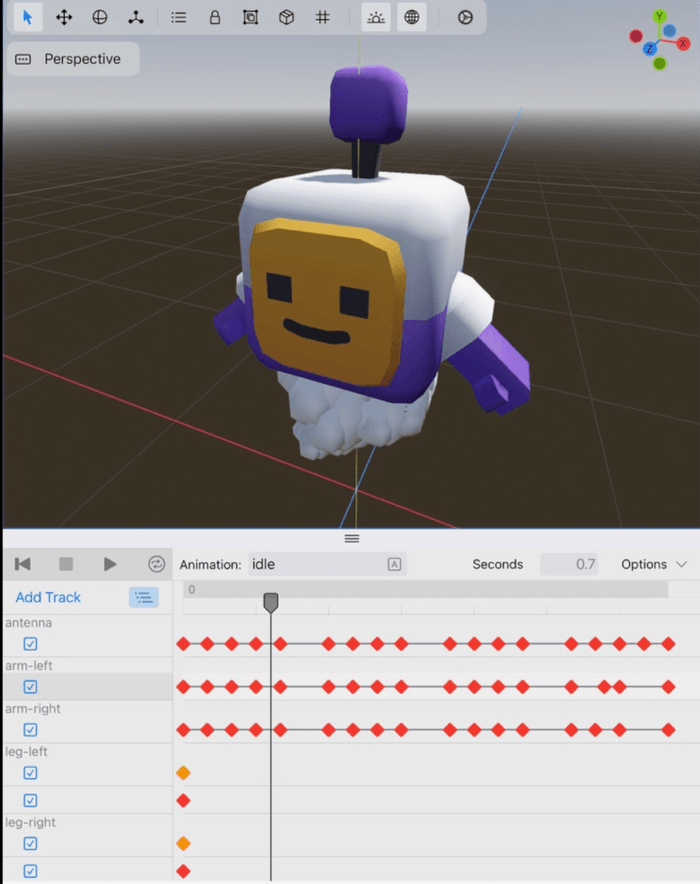
Animate characters, UI, and more with timeline-editing built for touch
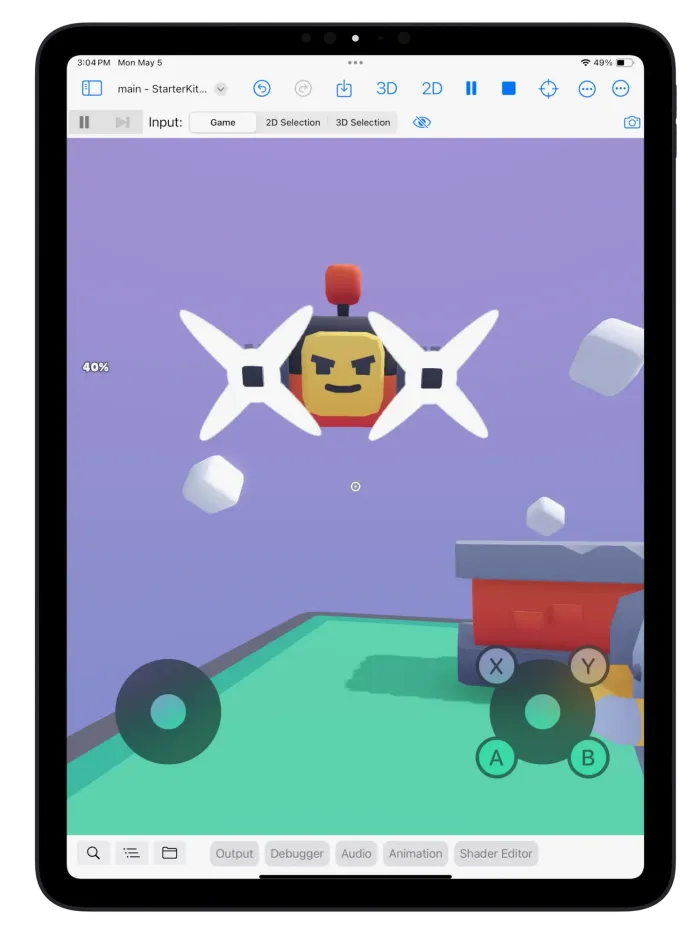
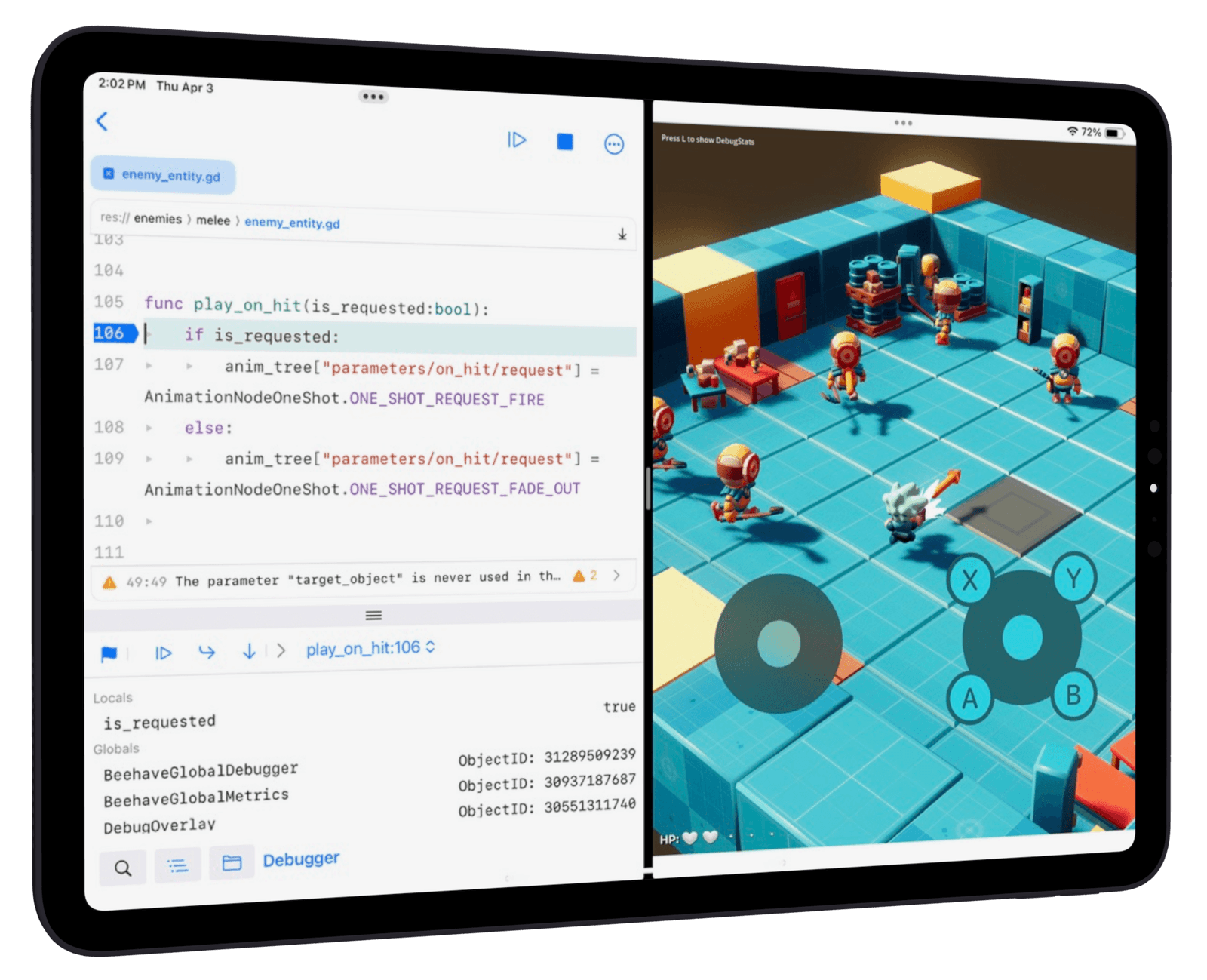
Select and inspect scene nodes - and interact with the editor - while running the game
Powered by Godot, the powerful, and popular, open source game engine, distribute your games with a runtime that is not encumbered by commercial redistribution restrictions

Built for Touch
Xogot embraces iPad and iOS conventions to give you a smooth, native experience that feels right at home on your favorite device
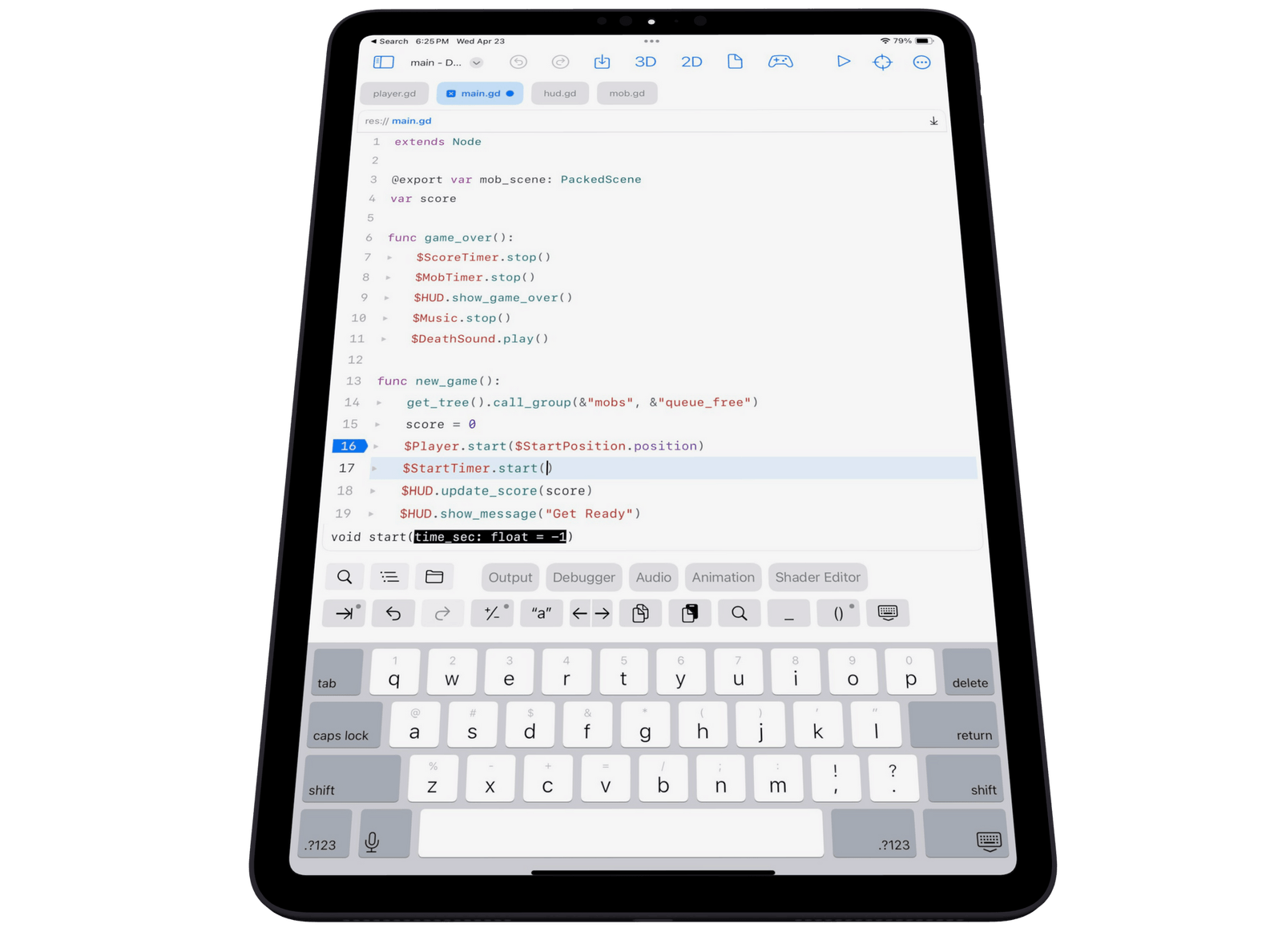
Xogot's code editor is 100% native to enable maximum productivity when composing game logic in GDScript
With a fully-integrated debugger, you can set breakpoints, explore your program state and even profile key parts of your game directly on your iPad or iPhone


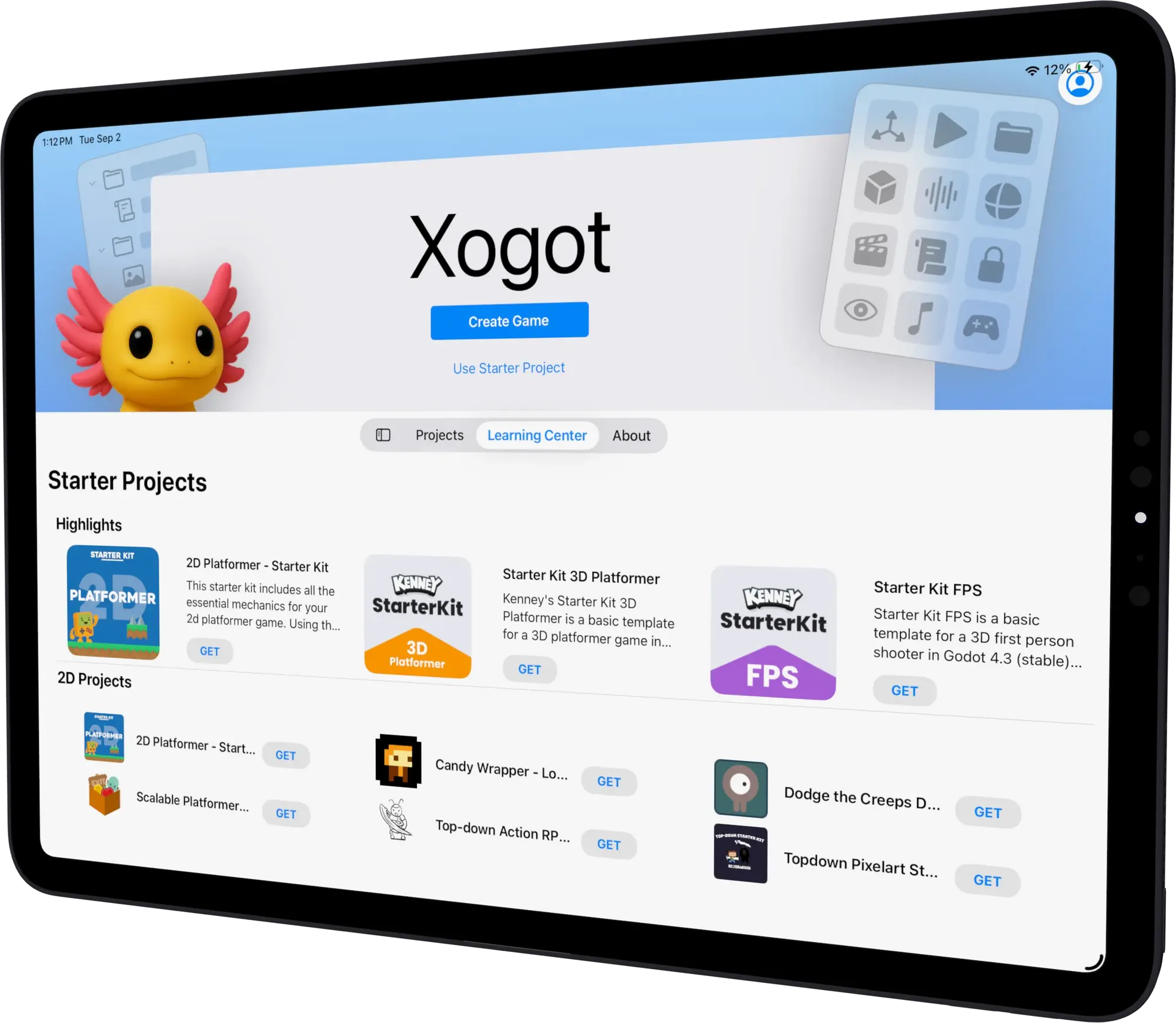
Export to WebAssembly and share your game with a link — playable in any modern browser, on any device.
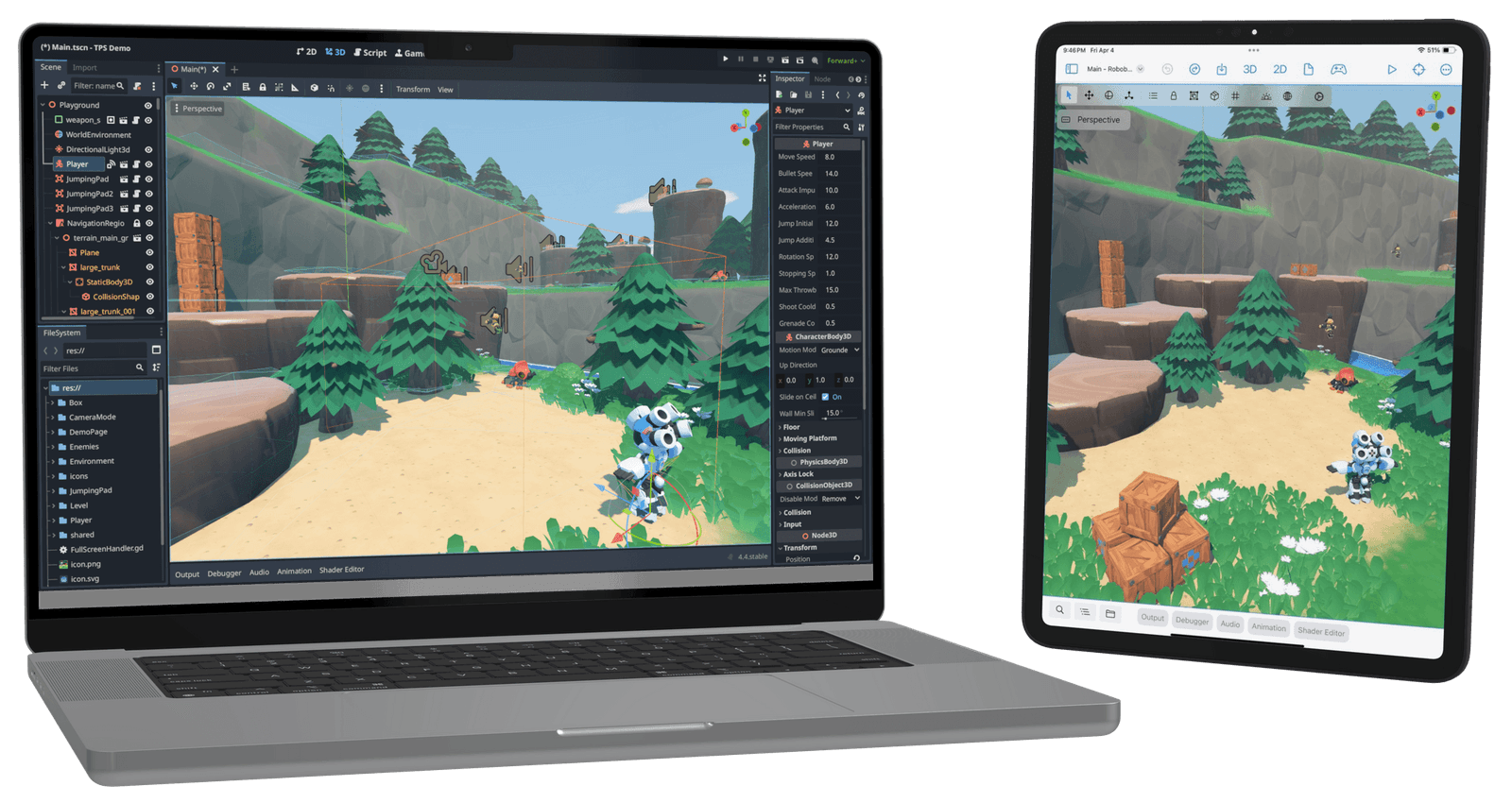
Or, use Godot on the desktop to publish to iPhone, iPad, Android, Windows, Steam, consoles, and more.

Use Stage Manager to split your work across multiple displays on iPad Pro or iPad Air
Code on one screen, test and design on another.
Arrange windows and tools to suit your style.
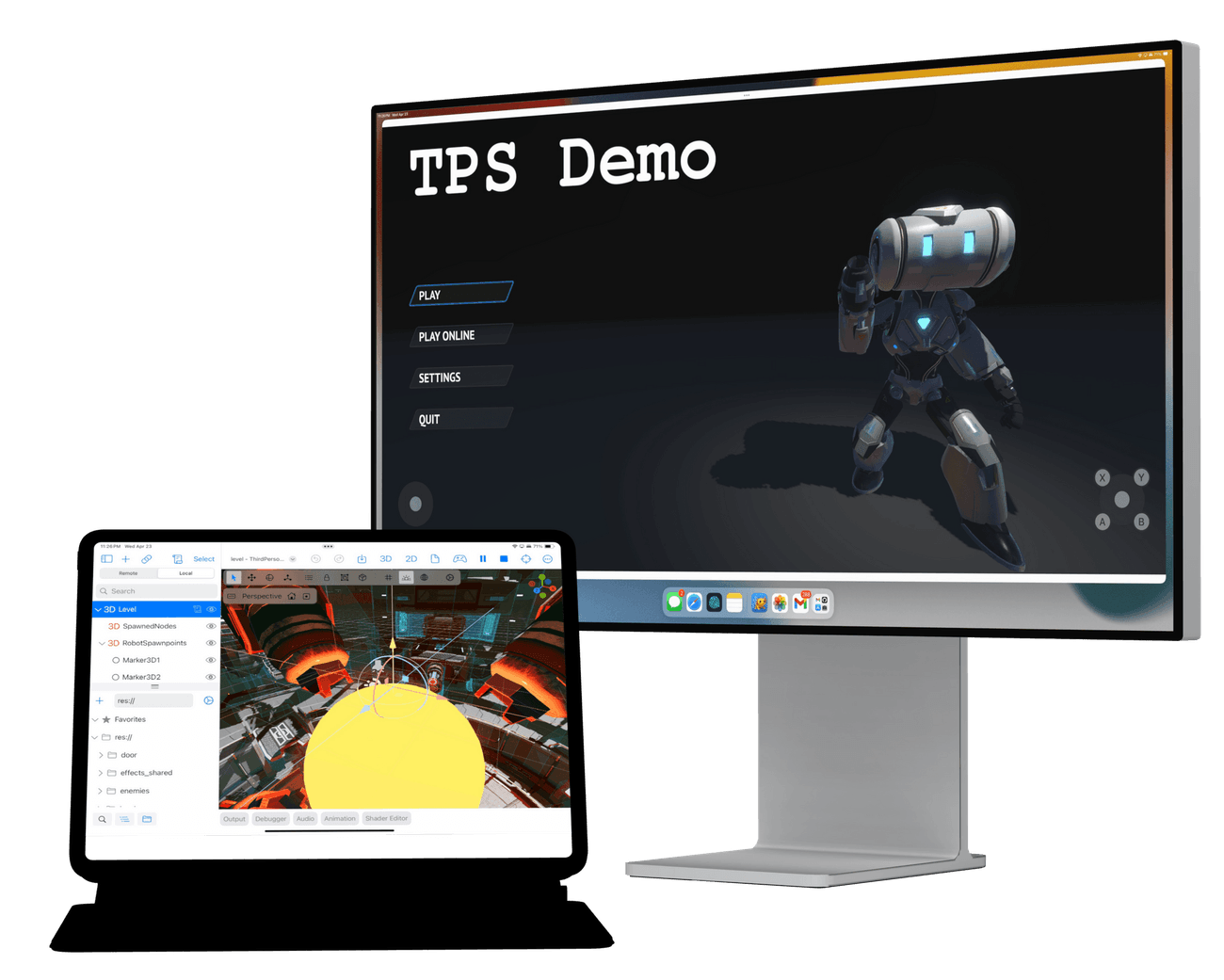
Import projects from iCloud, USB drives, or GitHub (via Working Copy) and keep building on the go.

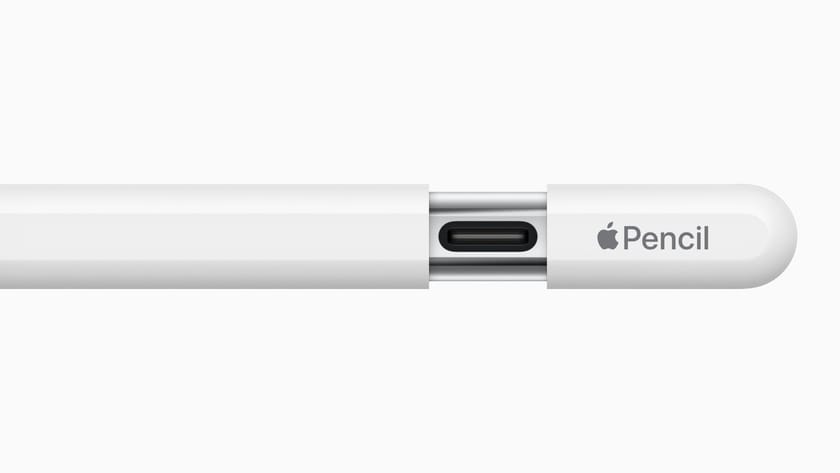
Edit 2D and 3D scenes in fine detail with Apple Pencil
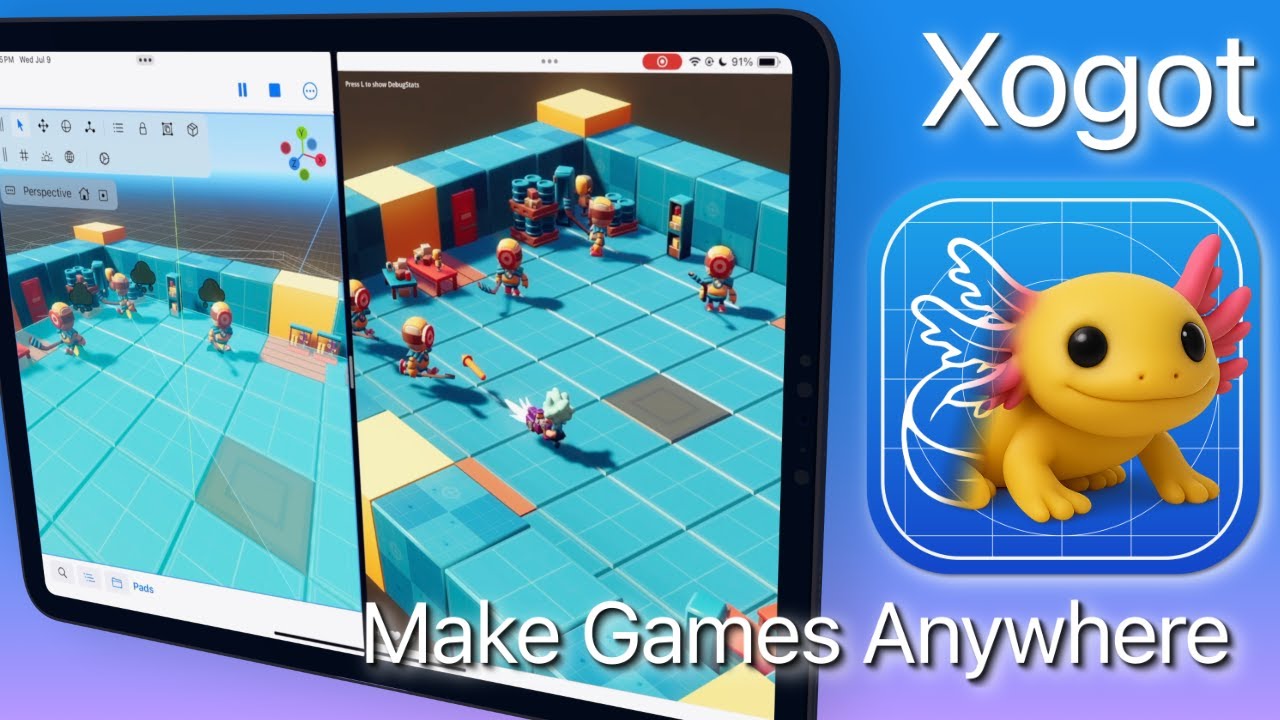
Make Games Anywhere with Xogot
See what’s possible with Xogot, the iPad and iPhone native version of the Godot game engine.
While OpcNetApi.dll is a powerhouse for , the industry is moving toward OPC UA (Unified Architecture) . UA is platform-independent (works on Linux/macOS) and much more secure. If you are starting a brand-new project today, the OPC Foundation recommends using their OPC UA .NET Standard stack instead of the older .NET API. If you'd like to dive deeper, let me know:
Troubleshooting tips:
Since this DLL relies on older Windows technologies, you might run into a few classic hurdles: Does OPCNetAPI.dll support .NET5.0? | Classic OPC opcnetapidll
| Location | Likelihood | Notes | |----------|------------|-------| | C:\Program Files (x86)\Common Files\OPC Foundation\ | High | Part of OPC Foundation .NET API runtime | | C:\Windows\System32\ | Low | Unusual – often indicates misconfiguration or malware | | Application’s install folder (e.g., C:\Program Files\MyOPCClient\ ) | High | Private assembly deployed with the app | | C:\Windows\SysWOW64\ | Low | 32-bit version on 64-bit Windows | While OpcNetApi
OPCNETAPIDLL-style libraries play a critical role in industrial automation by providing a manageable API surface for connecting applications to OPC servers, handling reads/writes, subscriptions, and security concerns. When used correctly—preferably with OPC UA, secure configurations, and robust error-handling—these DLLs enable reliable, maintainable, and secure data flows between control systems and enterprise or cloud applications. Proper attention to configuration, performance tuning, and security hardening is essential to realize their benefits while avoiding common pitfalls. If you'd like to dive deeper, let me